
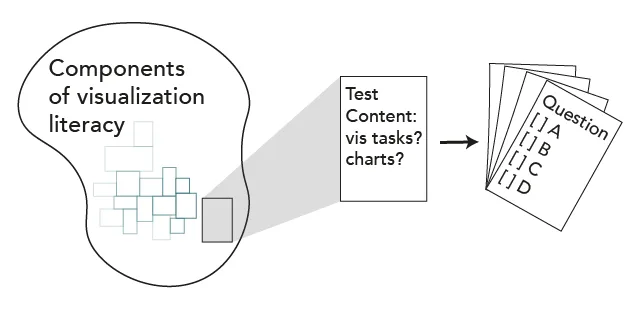
We contribute an autoethnographic reflection on the complexity of defining and measuring visualization literacy (i.e., the ability to interpret and construct visualizations) to expose our tacit thoughts that often exist in-between polished works and remain unreported in individual research papers. Our work is inspired by the growing number of empirical studies in visualization research that rely on visualization literacy as a basis for developing effective data representations or educational interventions. Researchers have already made various efforts to assess this construct, yet it is often hard to pinpoint either what we want to measure or what we are effectively measuring.
BELIV 2026 acceptance “Why Question Answering Modality Matters in Visualization Studies and Tests”
Our BELIV workshop paper “Why Question Answering Modality Matters in Visualization Studies and Tests” was accepted to the 2026 IEEE BELIV workshop track. Petra Isenberg will present this work at the VIS 2026 conference satellite in Paris. Continue reading BELIV 2026 acceptance “Why Question Answering Modality Matters in Visualization Studies and Tests”
